Essay · Judgement
Who decides, when the decision is offered?
Autonomy after autocomplete.
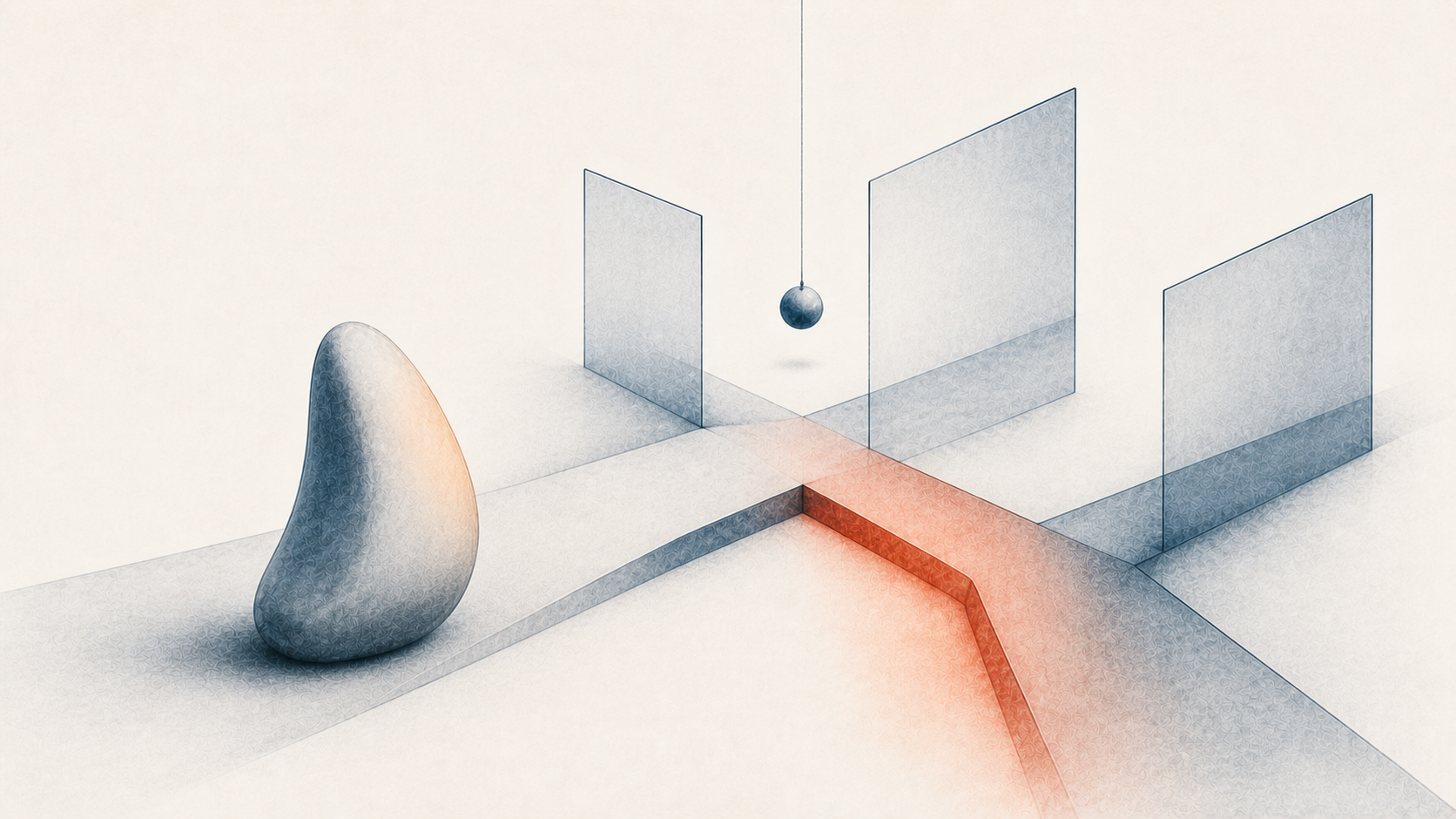
Most influence does not arrive as an order. It arrives as a convenient first option.
The route is already selected. The sentence is already completed. The next song begins before silence can become a choice. Recommendation systems rarely force us to do anything. They arrange the field in which choosing happens, making one direction effortless and every alternative slightly more expensive.
The architecture around the click
“The user decided” can be technically accurate and morally incomplete. A person may click freely while the architecture around the click has been optimised through thousands of experiments. The decision remains ours, but its conditions belong partly to someone else.
When fluency feels like authority
Artificial intelligence deepens this ambiguity because its suggestions feel responsive rather than generic. A generated answer appears to meet us where we are. It can adapt to our vocabulary, anticipate objections, and produce a plausible next step before we have described the problem fully. Fluency creates authority. The offered path begins to feel discovered rather than designed.
Influence without surrender
Autonomy has never meant freedom from influence. We think with languages we did not invent, inside institutions we inherited, among people whose expectations shape us. The relevant question is not whether AI influences a decision. It is whether that influence remains visible, contestable, and compatible with reflection.
The value of a pause
A responsible interface should sometimes slow the user down. It can show alternatives, expose important uncertainty, and distinguish between assistance and persuasion. Sometimes the pause matters more than another effortless step.
Small acts of re-entry
We also need a richer practice of refusal. It can be ordinary: leave the suggestion unopened, write the first sentence ourselves, or ask who benefits if the default becomes habit. Agency survives through small acts of re-entry.
The future of choice will not be determined only by what machines are allowed to decide. It will be determined by whether people still recognise the moment a decision is theirs.