Essay · Time
The right to an unoptimised life
Why efficiency is not the measure of a human day.
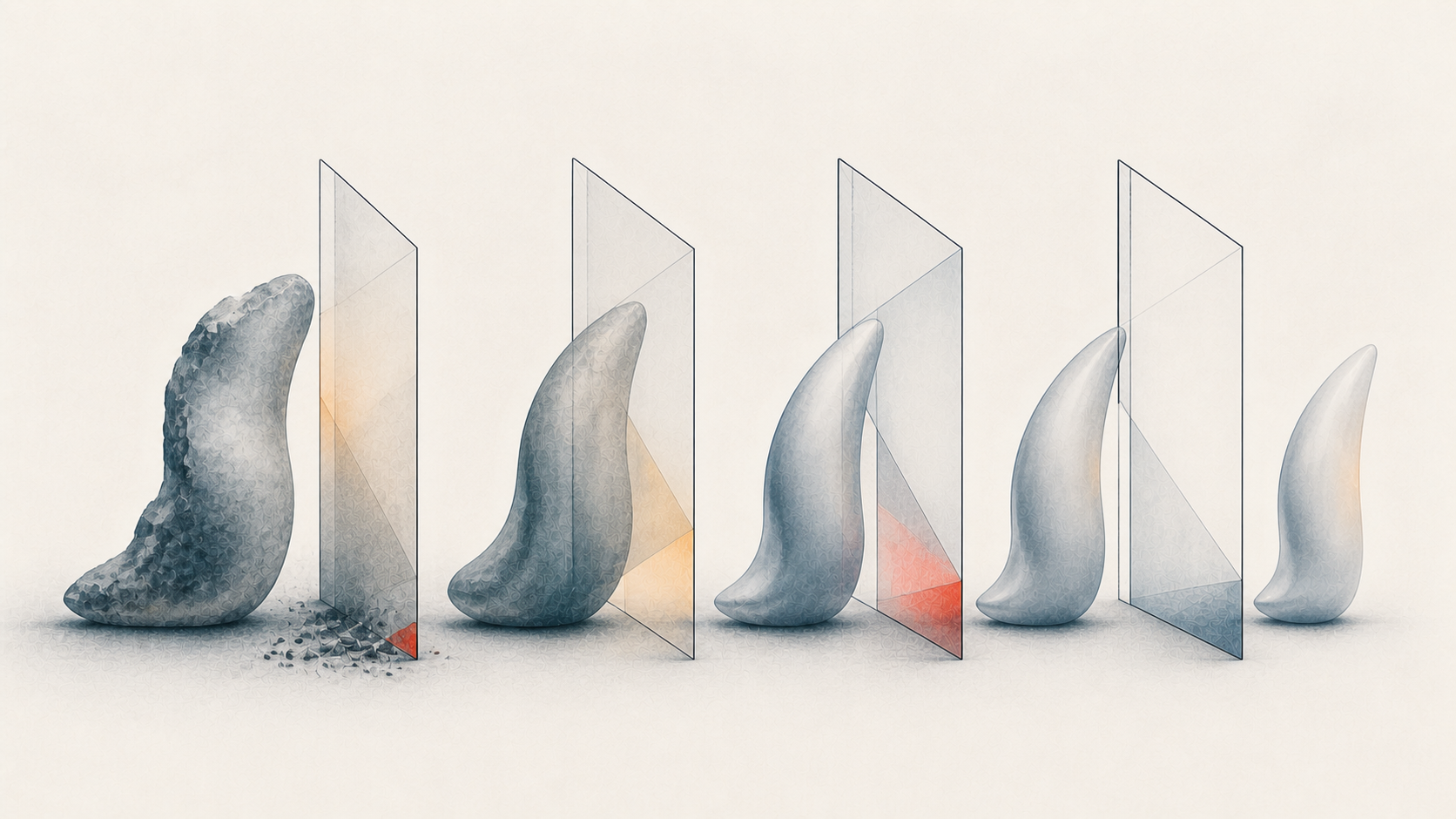
A free afternoon can now arrive with a plan already waiting for it.
An assistant can compare the weather, our habits, the places nearby, and the goals we once said mattered. It can propose the healthy walk, the useful meal, the suitable book, and the order in which all three will fit. Nothing is commanded. The system is simply helpful.
Much of the help is real. There is no moral value in missing a train because the timetable was difficult to read, or in losing an evening to administration that could have taken minutes. For someone balancing care, work, illness, and money, efficiency can be relief.
But imagine accepting the whole plan. The afternoon goes well. Every choice is defensible. At the end, a small question remains: was this the day we wanted, or merely a day in which nothing went wrong?
The friction that does not announce its value
Some obstacles deserve to disappear. An inaccessible form, an exhausting public service, or a process that consumes attention without serving a purpose is not a source of depth. Friction is often distributed by power, and people with less time or money are usually asked to endure more of it.
Yet not every slow or uncertain part of life is an obstacle. We take the longer street and notice somewhere we had no reason to enter. We struggle to phrase a thought and discover that the difficulty was not wording but meaning. We remain after a conversation's practical purpose has ended, and something more honest becomes possible.
Optimisation works when the goal is stable: arrive sooner, reduce errors, use less energy. A life also contains the harder question of which results should count as goals. The danger begins when that choice is hidden.
When assistance supplies the purpose
An AI system can make a plan only by representing a good outcome. Sometimes we provide it. At other times it is inferred from past behaviour, institutional priorities, or the interests of the service itself.
A productivity assistant may treat output as a better working day. A learning platform may equate progress with speed. A health system may reward only what it can record. Each measure can be useful. None is the whole good it stands in for.
A pattern in our behaviour is not a purpose. What we repeatedly chose may reflect exhaustion, limited options, or environments designed by others. A prediction of what will satisfy us can quietly become a recommendation about what should.
The offered life remains ours to refuse. Yet refusal takes energy when the alternative is already sensible, convenient, and waiting.
A life cannot be solved from outside
Some knowledge appears only after commitment. We do not always know which work is worth doing before we have spent time doing it, or which person will matter before the friendship has become inefficient.
This is not hidden data waiting for a better system. It is made through participation. The person choosing is changed by the attempt, and may judge the result differently from the person who began.
A life therefore cannot be optimised like a route. The traveller is not fixed, and neither is the destination. A world designed to prevent every avoidable mistake would need to decide in advance which experiences count as mistakes.
There is dignity in being allowed to choose what cannot be justified beforehand: a minor interest, a skill with no market, a garden that produces almost nothing, or time beside someone when there is nothing useful to say.
Who gets to be inefficient?
The freedom to resist optimisation is not equally available. A senior employee may call an unscheduled hour exploration while a junior worker accounts for every minute. A wealthy patient may receive the slow attention of a person while someone else is directed through an automated service built for throughput.
The right to an unoptimised life cannot therefore be reduced to personal discipline. Turning off notifications does not change a workplace that measures availability, a school organised around dashboards, or a care system funded by completed tasks rather than presence.
Efficiency has a politics. Those who define the target gain power over everyone whose life must be made legible to it. The people being optimised are not always the people who receive the saved time.
A humane institution asks where efficiency's benefits go, and lets the people living under the system help define what improvement means.
Keeping time open
An unoptimised life is not a life without tools, plans, or ambition. It is a refusal to let what can be counted become the complete account of what time is for.
We can ask systems to remove needless work while declining to fill every space they free. We can design assistants that reveal the goal they are optimising, offer several paths, and leave some periods of learning, making, and rest without a predetermined outcome.
This may look like choosing the slower route, but slowness is not the final value. The deeper value is authorship: enough unclaimed time to notice a desire before it becomes a target, and enough openness to become someone our previous data could not predict.
Artificial intelligence can help us recover time from what never deserved it. A humane society must also leave room for the afternoon in which we discover that we wanted to go somewhere else.